



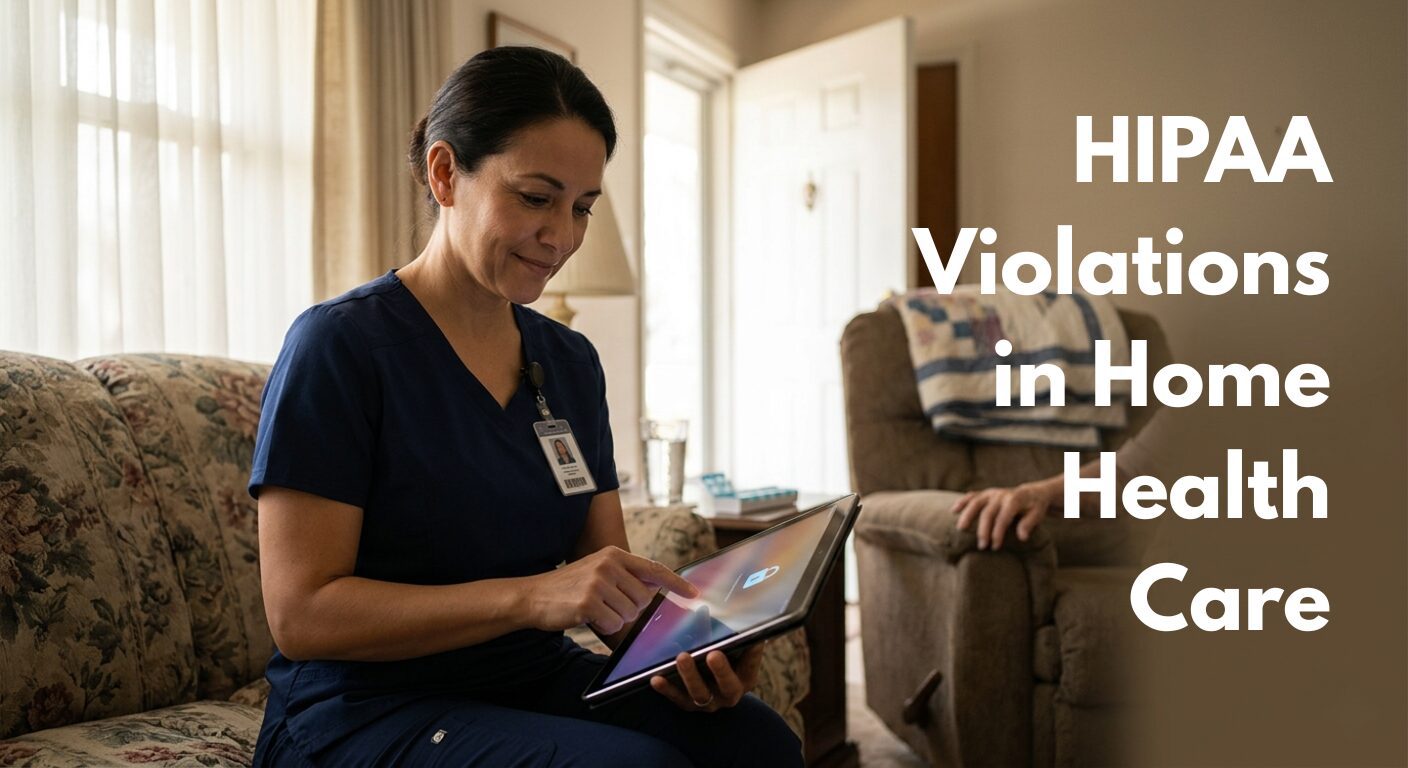
HIPAA establishes strict guidelines for handling patient information, including how it is accessed, shared, secured, and reported across healthcare settings. Even then, many home health agencies struggle to consistently follow these standards in daily operations. The U.S. Department of Health and Human Services continues to report a steady rise in healthcare data breaches, and many of these incidents stem from routine activities, such as communication gaps, improper access, and weak system controls.
In home health care, the risk increases because care happens outside controlled environments. Your team handles patient data on the move, uses multiple devices, and communicates quickly throughout the day. In such conditions, even small actions such as sharing an update through the wrong channel or accessing a record without a clear need can lead to serious compliance failures.
This is why understanding the most common HIPAA violations in home health care becomes critical. When you identify where these violations occur in daily operations, you can take clear steps to prevent them before they impact patient trust, compliance status, and your agency’s reputation.
Unauthorized Access to Protected Health Information
In many agencies, multiple team members can open patient records even when they are not directly involved in care. This usually happens during scheduling, coordination, or internal discussions. Staff may feel this is necessary to complete their work. However, HIPAA requires access to be limited to what is necessary for a specific role and task.
To manage this properly, define access based on job responsibilities. Review who can see what information in your system. Monitor access logs regularly. If your system allows broad access without checks, it creates a serious compliance gap.
Disclosure of Patient Information Through Unsecured Communication
Staff often share patient information through personal email, messaging apps, or open conversations. They choose these methods to communicate quickly and complete tasks efficiently.
These actions lead to unauthorized disclosure because these channels do not protect patient data. HIPAA requires secure and controlled communication.
You should provide secure communication tools that support fast updates. Define clear guidelines for sharing patient information. Train your staff to follow these protocols during daily work. You ask a healthcare compliance consultant to review your communication process and help you implement systems that support both speed and security.
Loss or Theft of Devices Containing Patient Data
Home health teams rely heavily on mobile devices. Staff use phones and tablets to access and update patient information. When these devices lack proper security, they become a major source of HIPAA violations.
Lost or stolen devices can expose patient data if they do not have adequate protection.
You should enforce device security policies. Require strong passwords and enable device protection features. Use systems that allow you to control or remove data remotely. These steps help protect patient information even if a device is lost. Nowadays, many home health agencies work with a compliance advisor who guides them in establishing secure device management practices.
Weak Security Measures for Protecting Patient Data
Most security risks do not come from complex system failures. They come from daily habits that go unchecked. Staff may use simple passwords, share login details, or access systems from unsecured networks. These actions make work easier in the moment but expose patient data over time.
For example, shared logins remove accountability. Weak passwords make systems easier to access. Downloading patient data to personal devices creates risk if the device is lost or accessed by others.
You should strengthen your security practices by:
- Assigning individual login access to each staff member
- Enforcing strong password rules and regular updates
- Adding multi-factor authentication for system access
- Limiting where patient data can be stored or downloaded
- Monitoring system activity to detect unusual access
A healthcare compliance consultant can help you review your current security setup to ensure it meets HIPAA requirements and supports smooth operations.
Use of Personal Devices Without Proper Control
Mobile devices are essential in home health care. At the same time, they are one of the most common sources of data breaches. Many agencies allow staff to use personal phones without clear guidelines.
This becomes a problem when devices are lost, shared, or used without protection. To reduce this risk, set clear rules for device usage. Require strong passwords and enable device security features. Use systems that allow you to control access and remove data if needed. A compliance advisor can help you define a device policy that matches your team’s working style and still protects patient data.
Improper Handling and Storage of Patient Information
Staff sometimes store patient information outside approved systems. They may write notes on personal devices, save drafts, or leave documents unsecured during fieldwork.
These actions create multiple points where patient data can be exposed. Even if your main system remains secure, these practices increase overall risk.
You should review how your team handles documentation during daily operations. Encourage staff to complete records within secure systems. Remove the need for temporary storage by improving workflows. Clear handling practices reduce data exposure.
Delayed Reporting of Data Breaches
HIPAA requires agencies to report any breach of patient information within a defined time. A violation occurs when staff delay reporting or fail to report incidents completely.
In home health settings, this often happens when a staff member sends patient information to the wrong person, loses a device, or notices unauthorized access. Instead of reporting immediately, they may try to correct the mistake quietly or wait until later. This delay increases the impact of the breach and exposes the agency to higher penalties.
You should create a clear and simple reporting system that staff can follow without confusion. Make it clear that immediate reporting is required, regardless of the size of the incident. When your team reports issues quickly, you can take action early and limit the damage.
Lack of Business Associate Agreements
Agencies often work with external vendors such as billing services and software providers. These vendors may handle patient information as part of their work.
If you do not establish proper agreements, you create a compliance risk. HIPAA requires you to ensure that vendors follow the same data protection standards. You should sign Business Associate Agreements with all relevant partners. Review their compliance practices regularly. This ensures accountability and protects your agency from external risks.
Failure to Provide Adequate HIPAA Training
HIPAA requires agencies to train their staff on how to protect patient information during daily work. A violation occurs when training fails to prepare staff to handle real situations they encounter in home health care.
In many agencies, training focuses on general rules instead of practical application. Staff attend sessions, but they do not learn how to apply those rules during patient visits, documentation, or communication. As a result, they rely on quick decisions during the day. This leads to actions such as sharing patient details through incorrect channels, accessing records without a clear purpose, or discussing information in unsecured environments.
You should design training that reflects actual work conditions. Use real scenarios from your operations to explain what is allowed and what is not. Conduct regular training so staff stay up to date and confident in their decisions. When training connects directly to daily tasks, it reduces errors and strengthens compliance across your agency.
Need Expert Guidance for HIPAA Compliance in Your Home Health Agency?
Managing HIPAA compliance while handling daily patient care responsibilities is really challenging. Gaps often appear in areas you may not notice until they turn into serious issues. This is where the right guidance from an expert makes a difference.
Shannon Jackson, The People’s Nurse – The Healthcare Compliance Consultant, works closely with home health & hospice agencies to identify compliance gaps, strengthen internal processes, and build systems that align with real working conditions. Her approach focuses on practical solutions that your team can follow every day, not just policies that stay on paper.
If you want to build an audit-proof framework for your agency, book a 15-minute discovery call with Shannon Jackson to stay compliant.