





How much attention do employees give their heart health during a normal workday?
Between meetings, deadlines, long hours at a desk, demanding workloads, and responsibilities outside work, health can easily move further down the priority list. World Heart Day, observed each year on September 29, gives organizations an opportunity to bring that conversation into the workplace.
But recognizing the day should go beyond sending an awareness email or putting up a poster. It can become a moment that gets employees thinking about their health, asking questions they may have been putting off, and noticing habits that are easy to overlook during a busy workweek.
For employers, the challenge is making the message relevant enough that employees actually engage with it. A little thought behind how the day is approached can turn awareness into something people remember and carry forward.
Why Should Employers Talk About Heart Health at Work?
Employees spend a significant part of their day at work, which makes the workplace a practical setting for health education. Many people know that heart health is important, yet topics such as blood pressure, cholesterol, physical activity, stress, and everyday lifestyle habits can easily receive less attention during a busy routine.
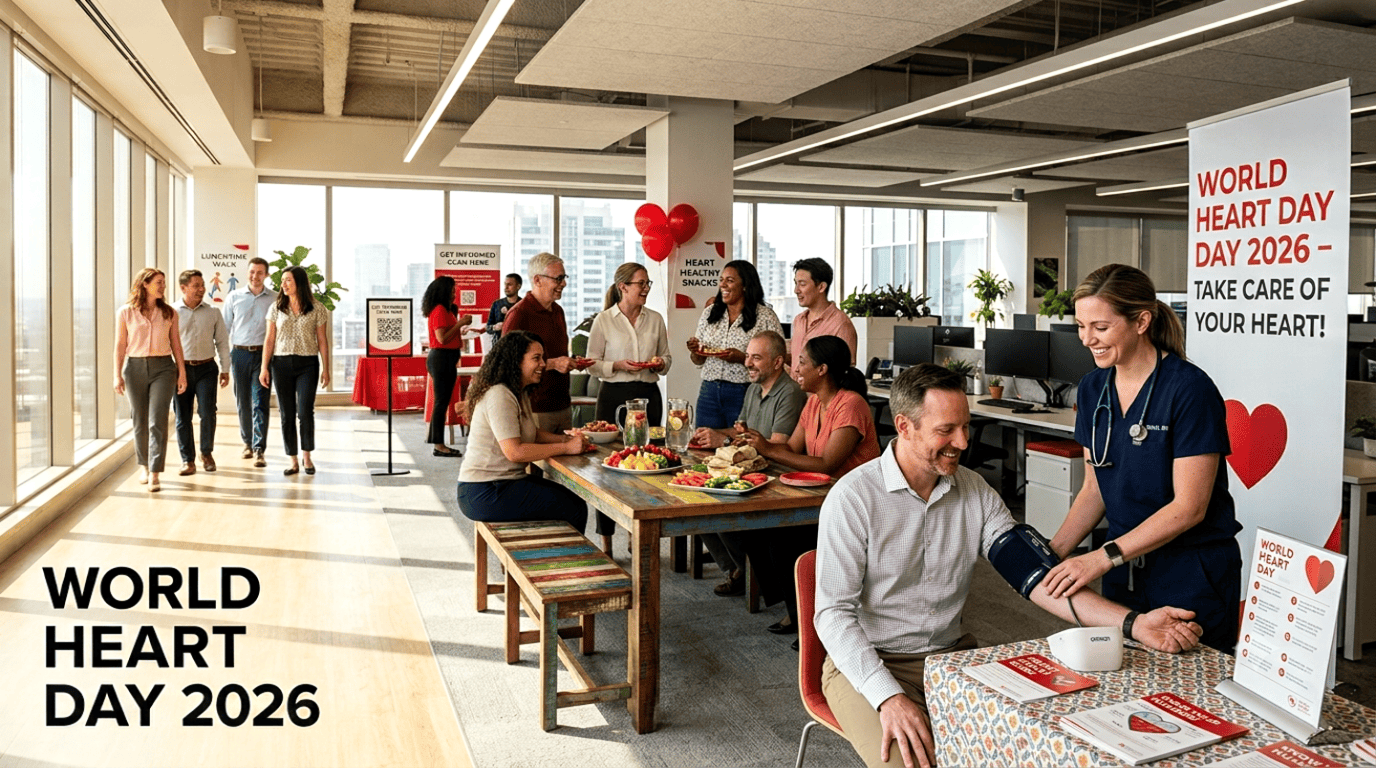
World Heart Day gives employers a timely reason to bring these conversations to the forefront. A workshop, health check, group activity, or educational session can encourage employees to think about their heart health and learn something useful along the way. A well-planned workplace activity can make heart health easier to discuss and give employees information they can apply in their everyday lives.
So, what can organizations do this World Heart Day?
7 World Heart Day Wellness Ideas for the Workplace
Exactly. The current descriptions read more like general year-round workplace wellness advice. Since the title promises “7 World Heart Day Wellness Ideas,” each point should give employers something they can actually organize or run for employees on or around September 29.
I’d make the ideas more event-focused like this:
1. Organize a “Know Your Heart” Workshop
Invite a qualified healthcare professional for a short, interactive session on heart health. Cover topics employees commonly hear about but may not fully understand, such as blood pressure, cholesterol, cardiovascular risk factors, physical activity, nutrition, and stress.
Keep time for employee questions at the end. A 30- to 45-minute session can turn the day into a useful learning experience rather than another awareness message sitting unread in an inbox.
2. Set Up a Voluntary Blood Pressure Check Station
Create a private space where employees can have their blood pressure checked by an appropriately qualified healthcare professional.
Alongside the screening, provide simple educational information explaining why blood pressure matters and when employees should speak with their healthcare provider. Participation should remain voluntary and confidential, and anyone with a concerning reading should be encouraged to seek appropriate medical follow-up.
3. Run a Workplace Walking Challenge
Give employees a reason to get out of their chairs and move together. Organize a lunchtime group walk, department walking challenge, or simple step challenge for the day.
Keep it inclusive rather than competitive. Employees can participate according to their abilities, and you can offer alternatives as needed. The activity can also spark a broader conversation about realistic opportunities to move during a normal workday.
4. Create a Heart-Healthy Lunch or Snack Table
Turn the usual office lunch or snack break into part of the campaign.
Offer a selection of fruits, vegetables, whole grains, water, and balanced food options. Add simple cards explaining some ingredients, or invite a qualified nutrition professional to share practical guidance. Employees get something they can enjoy together while learning how everyday food choices fit into cardiovascular health.
5. Hold a “Pause for Your Heart” Break
Set aside 10–15 minutes during the day and encourage employees to step away from their usual work.
The break could include gentle stretching, guided breathing, a short walk, or simply quiet time away from screens and work conversations. Managers should participate too. It sends a useful message that taking an appropriate break during a demanding day is part of looking after well-being.
6. Create a “Know Your Numbers” Education Corner
Set up a small educational station in a shared workplace area explaining commonly discussed health measures such as blood pressure, cholesterol, and blood glucose.
Use simple language and keep the information easy to scan. Add a QR code or handout directing employees to reliable health resources. Encourage them to speak with their own healthcare provider about which screenings and health checks are appropriate for them.
7. Ask Every Employee to Choose One Heart-Healthy Habit
End the campaign with something employees can take beyond the workplace.
Invite everyone to choose one realistic habit to work on, such as walking more regularly, taking proper breaks, improving sleep routines, preparing more balanced meals, or scheduling an overdue health appointment.
Employees can keep their choice private. The activity simply gives them a reason to turn what they learned during the day into one practical next step.
Want to Bring Employee Health Education Into Your Workplace?
Employees do not need another wellness message they will forget by the end of the day. They need practical health education they can understand and apply to their everyday lives.
Shannon Jackson, RN, supports organizations through employee wellness education, health-focused corporate training, and workplace workshops designed to make important health conversations more accessible and actionable.
This World Heart Day, consider going beyond awareness. Connect with Shannon Jackson to explore an employee health and wellness workshop that can help your team make informed choices about their well-being throughout the year.