




Patient privacy becomes harder to manage when care does not happen inside one controlled office or facility. In home health care, patient information moves with clinicians, tablets, phones, printed schedules, visit notes, family conversations, and electronic health records. One small habit can create a privacy risk if the agency does not have clear systems in place.
That is why home health HIPAA compliance needs daily attention. HIPAA compliance risks for home health agencies often come from weak risk assessments, unsecured devices, casual texting, unclear family communication, poor staff training, missing business associate agreements, and weak breach response planning. When agencies understand these risks early, they can protect patient trust and reduce avoidable compliance problems.
Why Is HIPAA Compliance Important for Home Health Agencies?
HIPAA compliance is important for home health agencies because staff handle sensitive patient information every day. This can include diagnoses, medication details, care plans, visit notes, insurance information, addresses, phone numbers, and personal health updates.
In a home health setting, this information does not stay in one office. It moves between clinicians, care coordinators, family members, mobile devices, electronic health records, and patient homes. That makes privacy protection more challenging and more important.
HIPAA rules help protect protected health information, also known as PHI. They guide how agencies collect, use, share, store, and protect patient details. For home health agencies, this means staff need to be careful during phone calls, text messages, documentation, scheduling, billing, and family communication.
Strong HIPAA practices help agencies protect patient trust. They also help teams avoid careless mistakes that can expose private information. When staff understands what patient information needs protection and how to handle it safely, the agency becomes more prepared, responsible, and trustworthy.
Common HIPAA Compliance Risks for Home Health Agencies
Risk 1: Not Completing a Proper HIPAA Risk Assessment
Many home health agencies believe they have met their HIPAA responsibilities because they already have privacy policies, forms, and internal procedures in place. However, having these documents does not always mean the agency has identified every possible risk to patient information.
A proper HIPAA risk assessment reviews every place where staff store, access, use, or share protected health information. This includes electronic health records, mobile phones, tablets, printed schedules, staff notes, emails, vendor systems, and documents that clinicians carry during home visits.
Privacy risks often hide inside routine activities. Staff may share a login, continue using an outdated device, store information in an unsecured location, or work through a vendor system that no one has reviewed recently.
When agencies skip a detailed risk assessment or treat it as a paperwork exercise, they can easily overlook these gaps. A thorough assessment helps leaders identify weak areas early, understand what needs attention, and correct problems before they become larger HIPAA compliance concerns.
Risk 2: Unsecured Mobile Devices and Remote Access
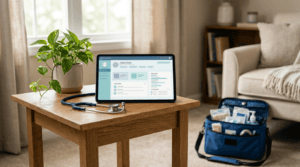
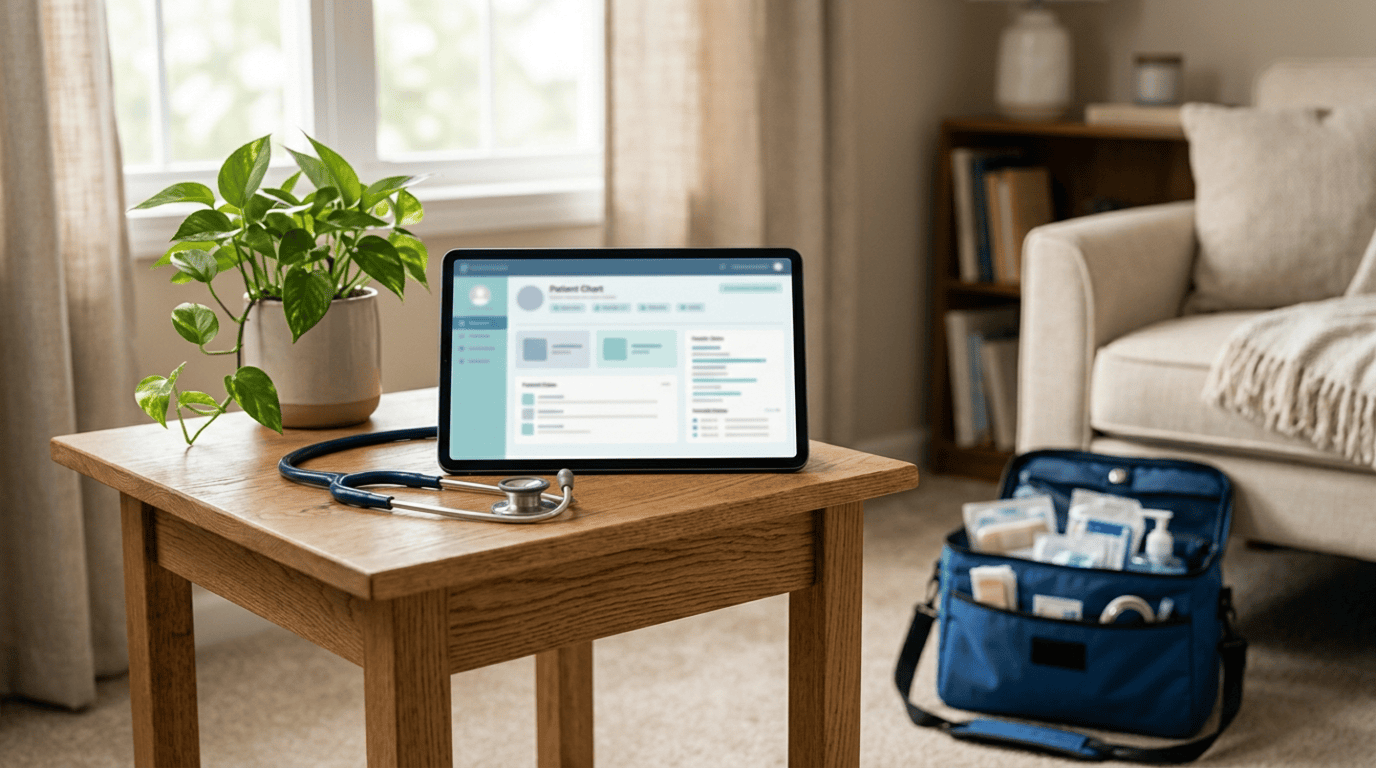
Phones, tablets, and laptops are now a normal part of home health care. Staff use them to check schedules, update patient records, communicate with colleagues, and document visits.
The problem begins when these devices are not properly protected.
A lost phone, shared password, unlocked screen, or unsecured public Wi-Fi connection can put patient information at risk. Home health agencies should have clear rules for every device that can access patient information. Safeguards such as strong passwords, encryption, secure access controls, automatic screen locks, and remote wipe features can help reduce the risk of unauthorized access.
Staff should also understand what they can and cannot do when accessing patient records outside the office. Clear expectations are especially important for employees who work remotely or move between several patient homes throughout the day.
Risk 3: Texting or Emailing Patient Information Without Proper Safeguards
Home health teams often need to communicate quickly. However, convenience should never come at the cost of patient privacy. Even a short message can contain sensitive information. A patient’s name, address, diagnosis, medication details, wound photo, or treatment concern may all qualify as protected health information.
Problems often happen when staff use personal messaging apps, regular email accounts, or other communication tools that the agency has not approved. Agencies should provide secure communication options and clearly explain how employees should use them.
Staff need to understand what type of information can be shared, which communication platforms are approved, and when patient information should not be sent through text or email. Clear communication policies can prevent an innocent shortcut from becoming a serious privacy concern.
Risk 4: Sharing Patient Information With Family Members Without Clear Permission
Family members often play an important role in home health care. They may help manage medications, attend appointments, support daily routines, arrange transportation, or communicate with the agency when the patient needs assistance. Because family involvement feels natural, staff may sometimes assume that sharing patient information with relatives is automatically acceptable.
That assumption can lead to a privacy problem.
A patient may be comfortable sharing information with one family member but not another. They may also agree to discuss certain parts of their care while wanting other health information to remain private. These situations can become especially difficult during home visits, phone calls, or urgent conversations when several relatives are involved.
Home health agencies should have a clear process for documenting who is authorized to receive patient information. Staff should also know where to find that information before answering questions or discussing a patient’s condition. Taking a few moments to check permission can prevent an uncomfortable situation and help protect the patient’s privacy.
Risk 5: Weak Staff HIPAA Training
HIPAA policies are only useful when employees understand how to follow them during real situations. A policy manual sitting in a drawer will not protect patient information if staff do not know how those rules apply to their daily work.
Home health employees need practical HIPAA training that reflects the situations they actually face. Generic training that staff completes once a year may not be enough to prepare them for real privacy decisions in the field.
For example, employees need to know what to do when a family member asks for an update, when they want to send a patient photo, when they access records outside the office, or when they accidentally send information to the wrong person.
Weak training can contribute directly to many of the risks already discussed. Employees who do not fully understand privacy procedures may make mistakes without even realizing they have done something wrong. HIPAA training should cover secure communication, patient photos, family questions, record access, mobile devices, documentation, and incident reporting. Training should also be updated whenever the agency introduces new technology, changes its policies, or adjusts its working processes.
Risk 6: Missing or Weak Business Associate Agreements
Home health agencies often work with outside companies for billing, IT support, transcription, software, and other services. Some of these vendors may need access to protected health information as part of their work.
When a vendor handles PHI on behalf of the agency, the right Business Associate Agreement, or BAA, needs to be in place. This agreement explains how patient information should be handled and the vendor’s responsibilities under HIPAA.
A common mistake is assuming that a vendor is HIPAA-compliant simply because the company is well known or appears trustworthy. In such a case, if patient information is exposed and the correct agreement is not in place, the agency may face additional compliance concerns. That is why agencies should review their vendor relationships carefully, identify which companies can access patient information, and make sure the appropriate agreements are in place before PHI is shared.
Risk 7: Poor Breach Response Planning
Even when a home health agency follows strong privacy practices, mistakes can still happen. For example, staff may lose a phone, send an email to the wrong person, or leave paperwork containing patient information in the wrong place.
When an incident like this happens, the agency’s response becomes just as important as the steps it takes to prevent privacy risks in the first place. Therefore, staff must know exactly who to contact as soon as they notice a possible privacy issue. At the same time, agency leaders should have a clear process for reviewing what happened, documenting the incident, assessing the level of risk, and deciding what action to take next.
A clear breach response plan should outline reporting steps, assign responsibilities, explain documentation requirements, and guide staff through the next actions. When agencies prepare these procedures in advance, their teams can respond quickly and systematically instead of trying to figure out what to do during a stressful situation.
Should a Home Health Agency Work With a HIPAA Compliance Consultant?
Some home health agencies have the internal knowledge and systems to manage HIPAA compliance on their own. However, many smaller or growing agencies may struggle because their teams already manage patient care, documentation, staffing, scheduling, and daily operations.
A home health agency may need a HIPAA compliance consultant when:
The agency has not completed a recent HIPAA risk assessment.
- Privacy risks feel unclear or difficult to manage.
- Staff training is outdated, limited, or too general.
- Policies do not match how the team actually works.
- Field staff use mobile devices, tablets, or personal phones for patient-related communication.
- Vendors handle patient data, but business associate agreements need review.
- The agency has experienced a privacy concern, lost device, wrong email, or possible data incident.
- Leadership wants outside guidance before small gaps become larger compliance problems.
A consultant can help review HIPAA policies, identify risk areas, strengthen staff education, assess vendor agreements, and improve privacy practices across daily home health operations.
For agencies searching for a HIPAA Compliance Consultant in California, Shannon Jackson, RN, offers healthcare-focused guidance that helps teams understand compliance in a clear and practical way. Her support can help home health agencies improve privacy practices, reduce avoidable risks, and build stronger systems to protect patient information.
Final Thoughts
Home health agencies work in personal spaces, and that makes patient privacy even more important. A strong HIPAA process helps staff protect sensitive information while still delivering care with compassion, clarity, and confidence. Agencies that manage privacy well usually train their teams, review risks, and create simple systems staff can use during real patient visits. If you are unsure where your agency stands, start with an honest risk assessment and consider working with a qualified consultant who can guide you through the process with clarity and confidence.
Home health agencies work in personal spaces, and that makes patient privacy even more important. A strong HIPAA process helps staff protect sensitive information while still delivering care with compassion, clarity, and confidence. Agencies that manage privacy well usually train their teams, review risks, and create simple systems staff can use during real patient visits. If you are unsure where your agency stands. Start with an honest risk assessment and consider working with a qualified consultant who can guide you through the process with clarity and confidence.